/ Conversation
Eviction of Sydney venue sets dangerous precedent for city’s creative future
The Divine Playhouse was shut down just three days after opening, but amid all the noise and chaos surrounding God, gays and evictions, I seek comfort in the fair application of the rules.
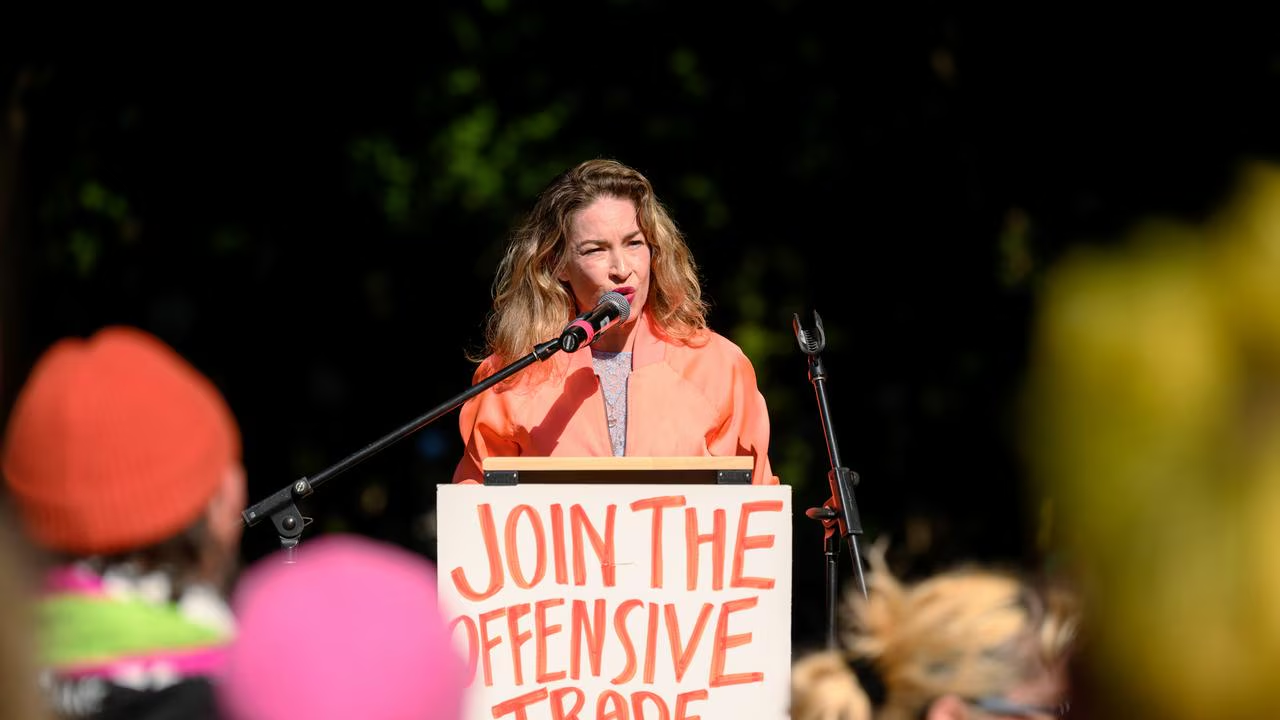
The Divine Playhouse was a small independent cultural venue located at 420 Kent St, Sydney CBD. It opened on a Wednesday; three days later it was shut down by a billionaire landlord via an eviction notice.
The legal basis for terminating the lease was “offensive trade” – a moralistic and punitive interpretation of Section 129 of the 1919 Conveyancing Act, which has its origins in 1840s England and originally intended to regulate “noxious, noisome or offensive art, trade and business occupation”.
Who’d have thought a Conveyancing Act could be so spicy?
Especially when invoked on a building that was a church 94 years ago. In coming years the site will be transformed into an internal “food and beverage offering” at the foot of a luxury apartment development.
I was there on opening night. There were DJs, a drag show, men dressed in habits dancing to Madonna, some arty people, queer people, the Arts Minister and 24-Hour Economy Commissioner – no one was staring into a screen.
On the opposite side of the road were members of Christian Lives Matter, the Prodigal Sons – a “faith-based Christian brotherhood and public ministry focused on spiritual discipline and reclaiming men for Jesus Christ” – and Fit for the Kingdom, whose members believe “training (in the gym) is an act of worship”.
This growing subculture of (mostly) men includes online influencers such as Spanian and Big Chocky, both of whom share their faith journeys on TikTok and Instagram and are big on fitness scripture readings, repentance, street ministry and community prayer.
While I don’t expect readers of The Australian to be overly familiar with the work of these YouTubers and TikTok titans, many are – more than 1-1.5 million, according to their collective Instagram followings.
Leading the charge against the Divine Playhouse is a man who describes himself as a traditional Catholic content creator, Liam Aquilina.
Aquilina told ABC radio that he did not object to the use of the former church space by members of the LGBTQIA+ community, but he did object to the “mockery” of Catholic symbols and traditions.
And herein lies the conundrum: the choice to go after the Divine Playhouse in particular.
There is a very long tradition of art that satirises and mocks religious practices.
The Ancient Greeks called it aischrologia – ritual comedy during holy festivals believed to ward off hubris and keep divine and human egos in check. Throughout history, the art of William Hogarth, Monty Python’s Life of Brian, Andres Cerrano’s Piss Christ, Salman Rushdie’s Satanic Versus, and more – Trey Parker and Matt Stone’s The Book of Mormon, which played at the Capitol Theatre for six months – have challenged religion.
Personally, I think the performance art of Pauline Hanson – specifically “Burqa in Parliament #1 and #2” – is much more provocative than that of the Sisters of Perpetual Indulgence, but that is simply because I don’t like it and am entitled to my opinion.