/ Conversation
AI companies want to water down Australia’s copyright laws. Artists are outraged, Labor is split
Anthony Albanese will deliver a landmark speech on AI this week as MPs are torn between attracting datacentre investment and protecting the rights of creatives.
When Anna Funder stood before a pack of journalists at Parliament House this month, she presented herself not just as a writer but also a “victim of crime”.
The Stasiland author was using the analogy to illustrate how technology companies have flagrantly “hoovered up” her literary works for their own profit.
Funder was also highlighting the importance of copyright laws in providing at least some layer of protection to Australians whose livelihoods depend on the original content they produce.
Authors, artists, musicians and media organisations were last year assured those laws wouldn’t be watered down when the federal government ruled out granting a legal exemption for artificial intelligence companies to mine content to train their large language models, which include ChatGPT, Gemini and Claude.
But continual lobbying from tech giants and a whistleblower’s tipoff to the independent senator David Pocock have ignited fears that the Albanese government might go back on its word – even as it continues to insist that it won’t.
The stoush has exposed splits within Labor about how to respond to AI and raised questions about how far the government should bend – if at all – to big tech to capture the supposed riches of the datacentre boom.
Misters divided
The prime minister, Anthony Albanese, is expected to deliver a major speech on Wednesday about the government’s plans for regulating and capitalising on the nascent technology.
After abandoning the former industry minister Ed Husic’s vision for a dedicated AI act in favour of a hands-off approach to regulation, the government is reportedly set to pivot back to a more interventionist strategy.
A concrete announcement on changes to copyright laws is not anticipated as part of Albanese’s address, which Guardian Australia has been told will be more vision statement than detailed policy announcement.
Senior Labor sources say ministers have been split on the path forward for copyright reform, delaying a resolution.
The industry minister, Tim Ayres, and the assistant minister for the digital economy, Andrew Charlton, are the most enthusiastic about attracting AI investment, while the attorney general, Michelle Rowland, who is responsible for copyright laws, and the arts minister, Tony Burke, are determined to protect the rights of creatives.
The prime minister sought to reassure creatives when asked last week if the copyright safeguards were at risk, pointing to the news bargaining incentive as evidence of Labor’s “strong track record” in protecting local content producers.
“These are complex issues, we’re working it through with the sector,” Albanese said. “But my government, I think, has a strong record of supporting people; one, having control over things that they have created, and secondly, if things are being used, being paid for it, being properly compensated for it.”
“The ultimate dirty deal”
The government has insisted it has no plans to grant a “text and data mining” exemption that would allow AI companies to scrape content to train their models in Australia without infringing on copyright laws.
The Tech Council of Australia chair and Atlassian co-founder, Scott Farquhar, directly appealed for the carve-out last July, claiming that “fixing this one thing could unlock billions of dollars in foreign investment”.
The Productivity Commission floated the idea of an exemption in a report a few weeks later, provoking a furious backlash from the creative sector that eventually led Rowland to kill off the proposal in October.
The attorney general immediately started fresh consultation with creatives, media and tech companies on other options to modernise copyright laws, including a paid licensing model for AI.
The government’s stated preference is for tech firms to negotiate agreements with creatives to pay to use their content.
But the timeframe for a resolution remains unclear, leaving the tech industry and creatives in the dark.
The creative sector, Pocock and the Greens have grown fearful that the “text and data mining” option could be resurrected as the Albanese government eyes more investment in datacentres.
In late June Pocock’s office was tipped off about an industry push for a copyright carve-out in exchange for at least $50bn in datacentre investment and contributions to a fund for creatives, supposedly worth $350m a year.
The independent senator for the Australian Capital Territory described the proposal presented to ministers as the “ultimate dirty deal” and demanded Labor immediately rule it out.
“To sell out Australian creatives would be a reckless act,’ Pocock told the Senate on 1 July. “To sell out Australian creatives for a couple of hundred billion dollars in datacentres, a bump to GDP, would be reckless.”
The federal government flatly rejected Pocock’s claims as inaccurate while repeating it had no plans to weaken copyright laws.
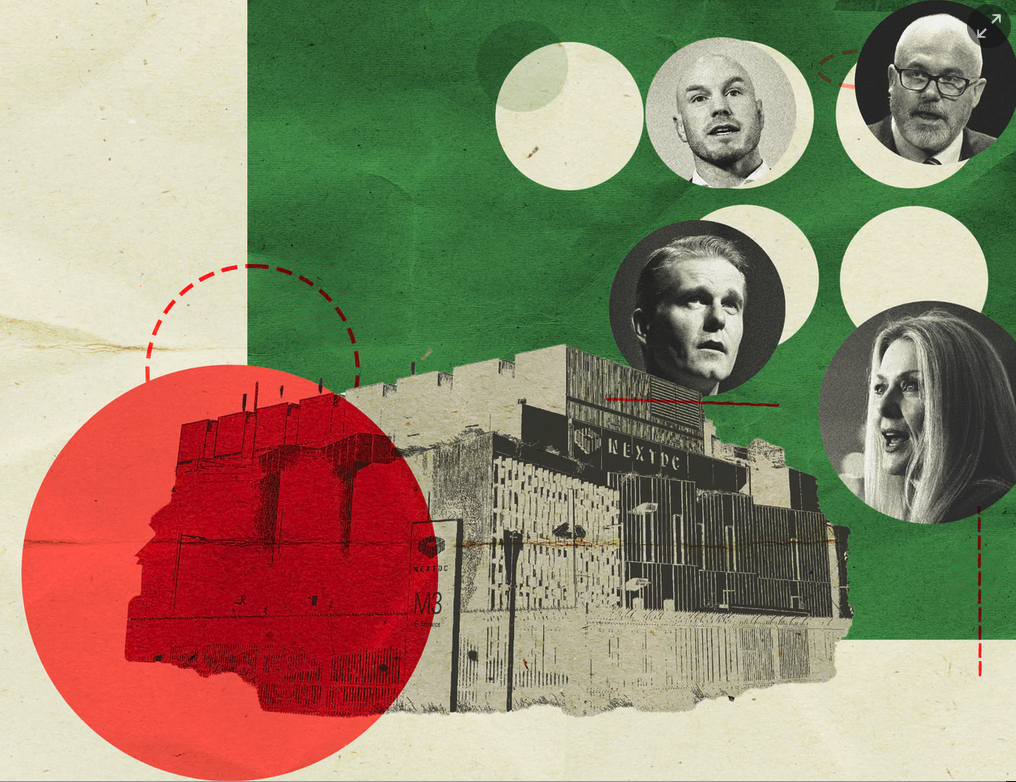
On Tuesday the Australian Financial Review reported that Anthropic was pushing for a deal in line with what Pocock was alleging as part of a plan to make Australia its second home outside the US.
Anthropic, whose chief executive, Dario Amodei, signed a memorandum of understanding with the federal government after meeting Albanese in April, was contacted for comment.
Industry and government sources, speaking to Guardian Australian on the condition on anonymity, poured cold water on such a deal with Anthropic or other companies.
But Guardian Australia understands the government has been told frontier AI companies view copyright laws as a “main barrier” to investment in training their models.